

Here in Southern Oregon we have heavy clay soil mixed with pebbles of various sizes. Most of the year the weather is dry, and the summers are really hot. Compacted clay soil, when dry, is as hard as cement, and anything planted in that kind of ground will not do well, as you can probably imagine.
Being used to the moisture that was always available to me in my Seattle gardens and in Germany, growing plants in Southern Oregon has stumped me for several years. I couldn’t figure out why my plants didn’t grow, why they got stuck at a certain size, and why they performed so poorly – even though I watered them and added compost and worm juice and fish fertilizer during the growing season. Last year I finally found something that really makes a difference.
As permaculture teaches, poor soil can be improved by adding bio matter. This is true for clay heavy soil as well as sandy soil and anything in between. Bio matter activates the soil’s microbiome, adds air channels, and absorbs/retains water, which in turn will provide plants with everything they need to grow well.
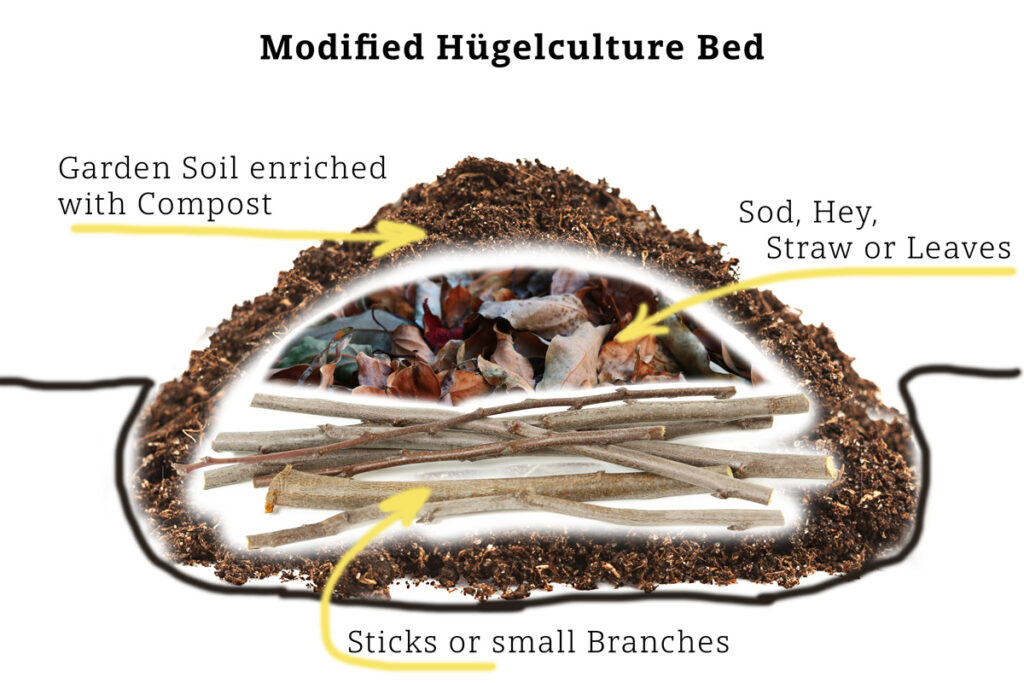
What is Hügelculture?
To add biomatter to my hard and dry clay soil quickly, I have modified the idea of Hügelculture to work on a small scale for my little garden. If you are not familiar with this method, it’s an old German and eastern European tradition of piling a fallen tree or log with a layer of sod, leaves, hay, or other small yard debris, then a layer of compost, then top it off with garden soil. This creates a “Hügel”, the German word for “mound”, which feeds and enriches the soil from the slow breakdown of the log, which happens over several years.
On these big Hügelculture beds, grass – or anything similar with shallow roots – is planted on it in the first year. As the wood decomposes it adds mycelium, microbes, and nutrients to the soil. Worms are attracted to it to help it decompose. After several years, the wood will have broken down completely, leaving rich and moist soil in its place.
Knowing about this practice, I have modified it for my small garden scale, and for the little time I have, in the following way.
Small Scale Hügelculture Beds
For my small scale garden around the house, I don’t have large logs available, but plenty of fallen branches as well as yard debris – perfect for my miniature Hügelculture beds. Here’s what I do:
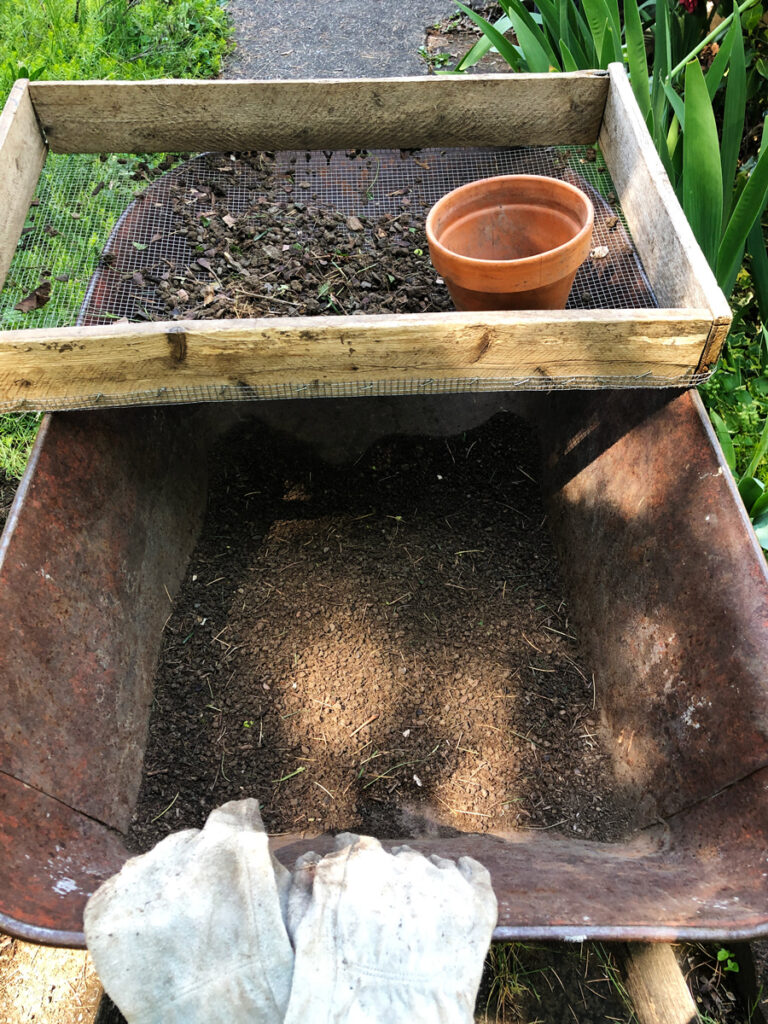
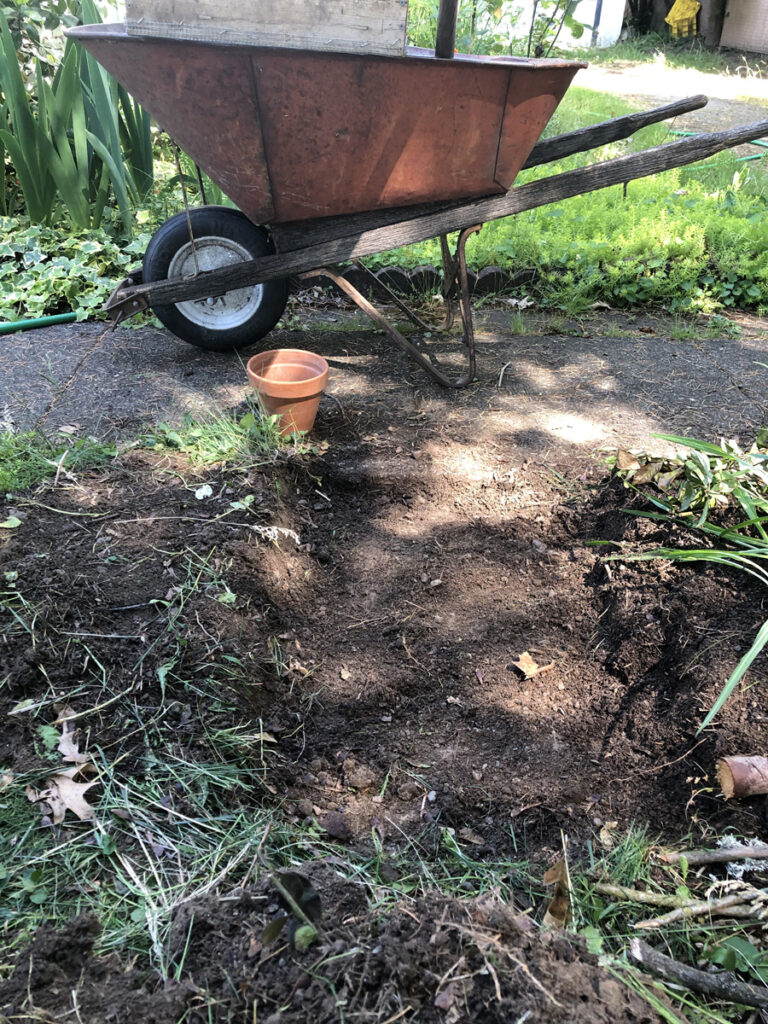
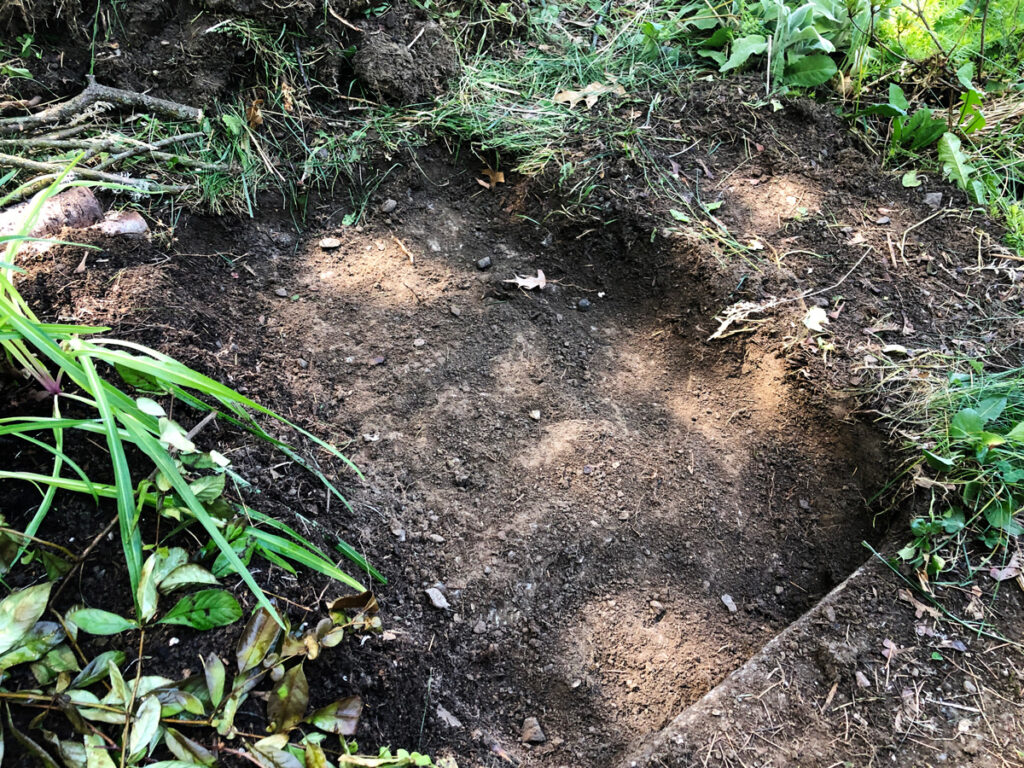
First, I dig up the sod in a small area, about 2 feet wide/long at the most. I put it aside in a pile, and dig up as much of the subsoil as I can. As I said before, it’s as hard as cement, so this takes a while. It goes straight into the screen on my wheelbarrow, because this light brown or beige dirt is full of rocks of all sizes, which I screen out up to a 1/4 inch.
A note here: hard clay soil is easier to dig out when moist; so soaking it beforehand will make it a LOT easier to dig, albeit a bit harder to screen. In my very compacted front yard I can dig down only about 5-8 inches, and my beds are only 1-3 feet in square, which is doable for me in one or two digging sessions.
Next, I use my spade or fork to soften the bottom of the subsoil a little before I add woody yard debris to it: small branches to medium sized limbs, but nothing thicker than a couple inches, all the way down to little sticks. They have to be cut up fairly small to create a nice thick layer.
On top of it I add the sod I dug up earlier, or add a generous layer of straw, hay, or leaves if I don’t have any sod – 2-3 inches.
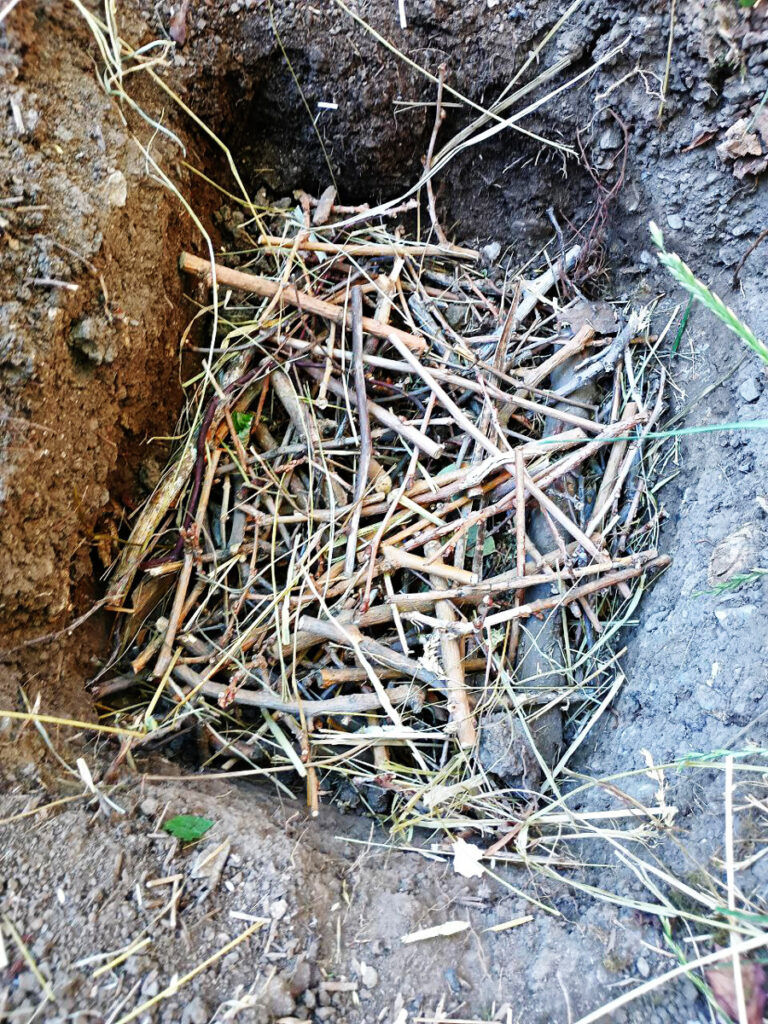
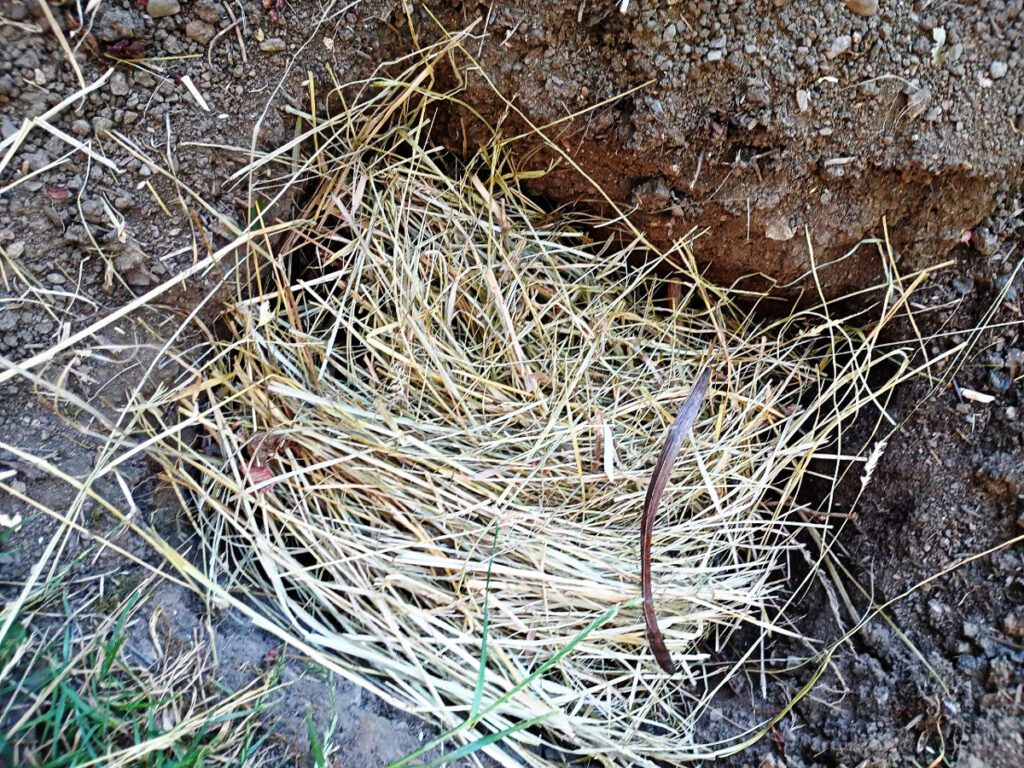
The final layer consists of the subsoil which I enrich with copious amounts of compost – made myself, lasagne style – and soil conditioner (cut up and composted wood shavings which I buy from my local co-op). I also add Azomite – a mineral powder and soil amendment that adds trace minerals back into the soil. This creates a raised bed with easy to work soft soil ready to be planted.
Note: As the debris decomposes, it is reduced in volume quite a bit, so make sure you create a generous mound to account for this shrinkage.
Now nature goes to work: funghi are breaking down the wood, adding valuable nutrients to the soil and making them available for plants. Earthworms dig it up, aerate it, and blend it together. The decomposing wood does create some heat while braking down – which can be useful in early spring to keep seedlings warm.
Now if you are familiar with how nitrogen works in the soil, you might be afraid that the decomposing wood could bind all the nitrogen and not leave any for the plants that are grown on top. This does not seem to be the case.
I have treated most of my front yard this way, and everything I have planted on these kind of beds gets twice as big as what’s growing in beds where I haven’t use this method and merely amended the soil with compost.
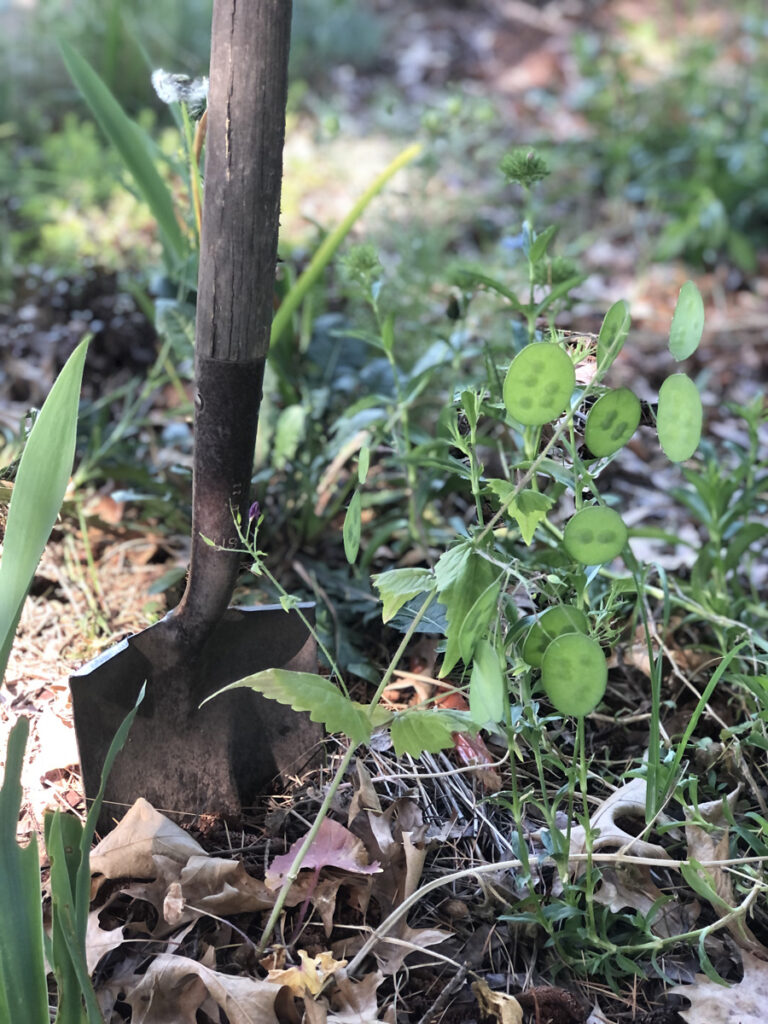
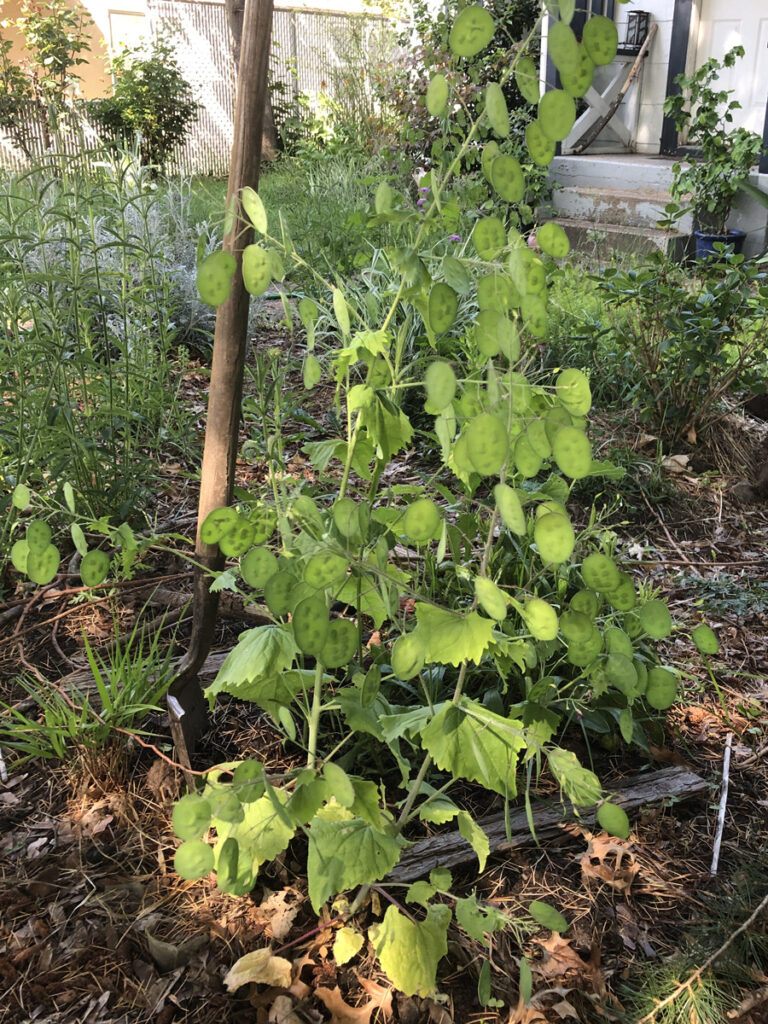
Utilizing yard debris this way is a win-win situation – it improves the soil while keeping the twigs and leaves out of landfill.
Summary
If you have heavy clay soil, this is a natural method to quickly transform it into good, useful growing soil – without the use of any chemicals. Clay soil is rich in minerals, but they are locked away and unavailable to plants when the soil is dry, compacted, and low on biomatter. By using the method of Hügelculture, it can be transformed within a very short amount of time into a rich and joyful garden.
Here is my Happy Soil Recipe:
- Remove turf, set aside.
- Dig up the subsoil as far down as possible, 1-2 spade lengths.
- Screen out rocks and set soil aside on a pile or in a wheelbarrow.
- Use sticks and small branches to fill the bottom layer of your bed, 3-5 inches high.
- Cover with sod, straw or hay, leaves, or similar yard debris, 2-4 inches high.
- Mix the subsoil you dug up with compost and soil conditioner (if available) and top the bed off with it. It will be 5 or more inches higher than the ground.
- Plant seeds or transplant veggies or flowers on top.
- Water and mulch.
- Watch your plants grow.
Do you have experience with Hügelculture? How are YOUR plants doing with it? Let me know in the comments below.